
One handle, two ways to open. Tilt the sash for secure, draught-free airflow on a cold morning, then slide it wide when the afternoon turns warm. No swing arc inside the room, and none outside the wall either.
Tell us the room and the rough opening size. We come back with a configuration, a glass recommendation and a fixed written quote.
Your details reach our Point Cook office only. No obligation, and no site visit unless you ask for one.
A tilt-sliding window — also written tilt and slide, or tilt-slide — is a sliding window fitted with European tilt hardware. Turn the handle one way and the sash tilts inward at the top, opening an arc-shaped gap that lets air move without letting anything else in. Turn it further and the same sash releases from the frame and runs sideways on its track for a full sliding opening.
The reason it matters in Melbourne is the seal. A conventional aluminium slider rides on the bottom track against brush seals, so it can only ever be as weathertight as a brush. A tilt-sliding sash closes back into the frame and compresses a continuous gasket on all four sides, pulled tight by locking points around the perimeter.
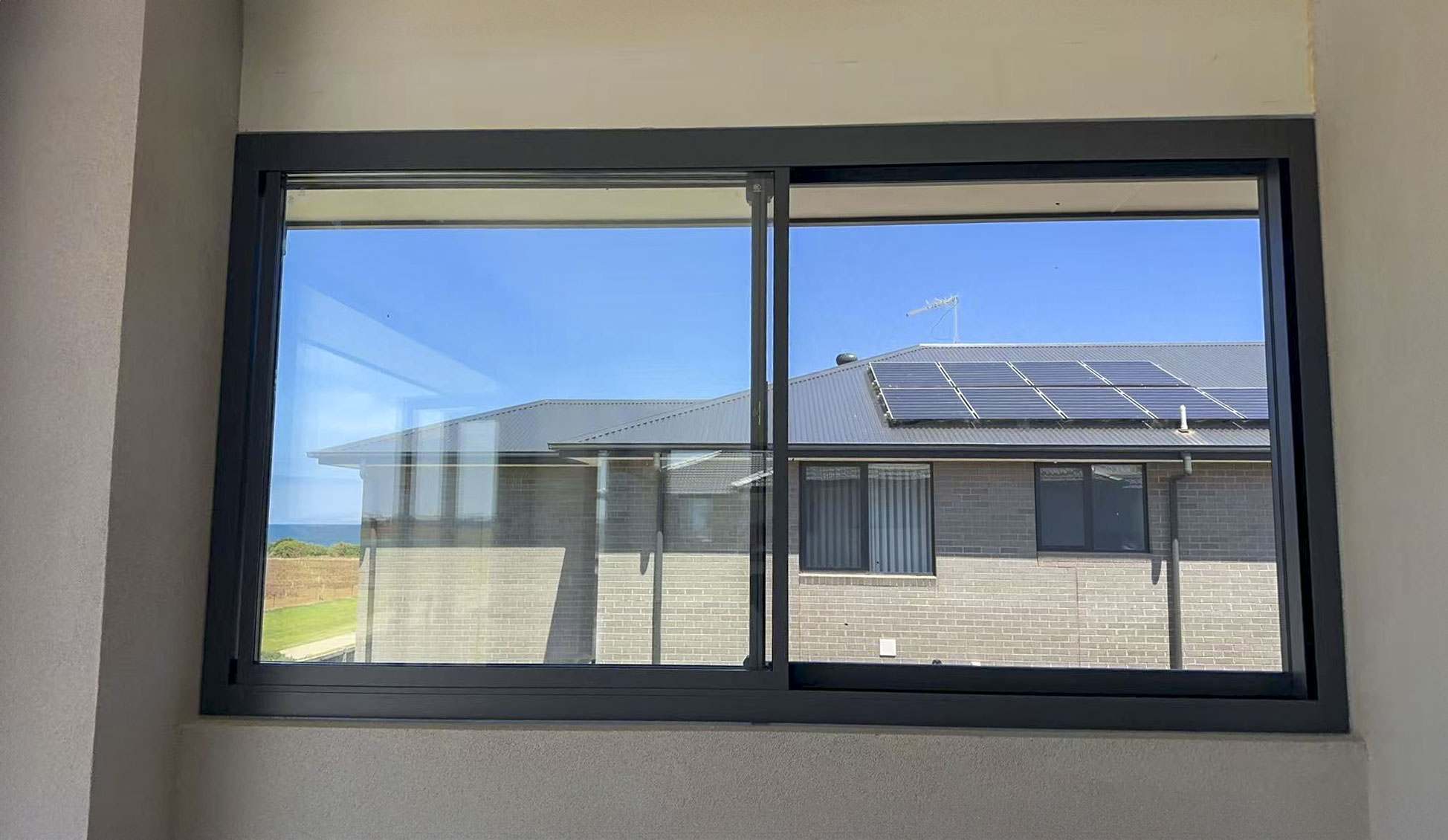
Every tilt-sliding window we build runs from a single handle. Where that handle points decides what the window does, and each position locks positively so the sash cannot drift.
The sash sits back inside the frame and the locking points pull it onto a continuous gasket. This is where the window spends most of its life, and where the weather sealing and the acoustic performance both come from.
The top of the sash leans inward on a bottom hinge and opens the arc-shaped gap. Warm stale air leaves through the top while cooler air draws in at the sides. The sash stays captured by the hardware, so it can be left open while you are out.
The sash disengages from the gasket, steps clear of the frame, then runs sideways past the fixed pane. Nothing swings into the room and nothing swings outside, so paths, decks and outdoor blinds all stay clear.
These are the advantages that come up once people have actually lived with one, rather than the ones that simply read well in a brochure.
The sash leans out from the head while the frame stays put, creating the distinctive arc opening. It reads as a deliberate design feature rather than as a window somebody has left ajar.
The tilt gap is narrow, high and shielded by the sash itself, so air moves steadily instead of gusting across the room. It is the setting most owners use through winter and during Melbourne’s frequent light rain.
In the tilt position the hardware still holds the sash on multiple points. You get overnight airflow in a bedroom without leaving a slider sitting open on its track, which is the compromise most Melbourne homes currently live with.
Nothing projects over a walkway, a pergola, an outdoor blind or a benchtop. Curtains, blinds and furniture sit where the room wants them, which is exactly where an inward-opening window falls down.
A compressed perimeter gasket combined with an insulated glass unit is a very different acoustic and thermal proposition to single glazing on brush seals. Both improvements come from the same detail.
The sash runs on a track rather than hanging off hinges, so its weight is carried by the hardware and not by your wrist. Large sashes stay easy to move, which matters for older residents and for windows used every day.
Tilt-sliding windows cater to different scenarios depending on their design and functionality. Our team helps you choose based on the opening size, the room, the level of security you need and how the window will be used day to day.


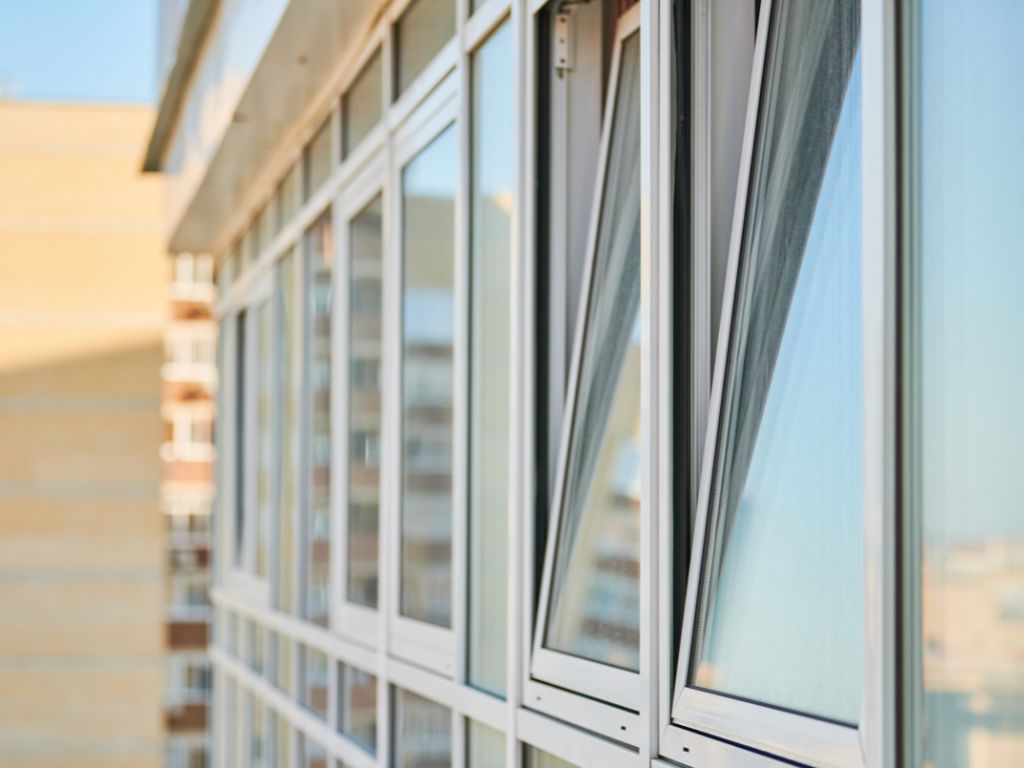
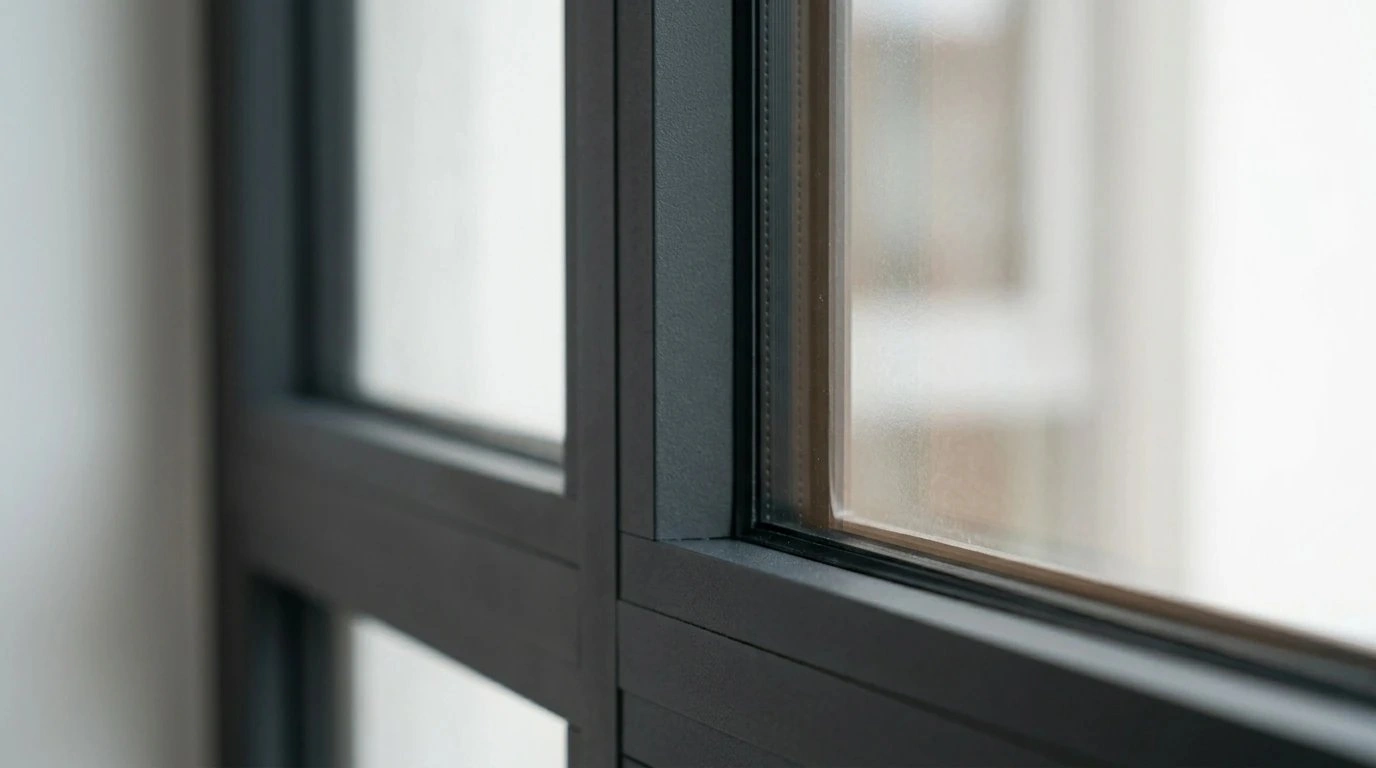

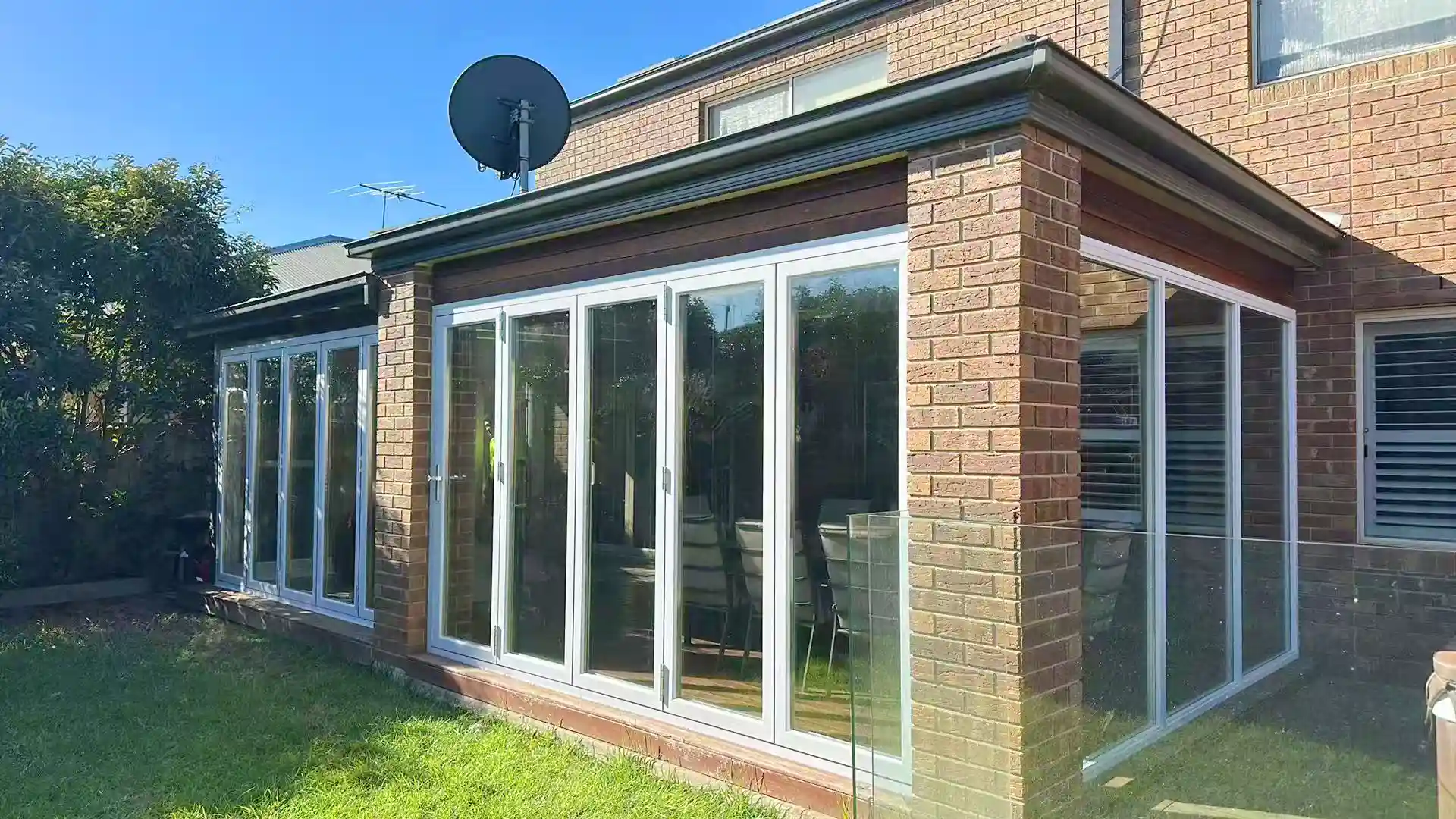
Most Melbourne homeowners are choosing between these four before they commit. The honest differences are set out below, including the ones where another window type is the better answer.
| What matters | Tilt-sliding | Standard slider | Tilt-and-turn | Awning |
|---|---|---|---|---|
| Weather seal | Perimeter compression gasket | Brush and pile seals on the track | Perimeter compression gasket | Perimeter compression gasket |
| Secure ventilation | Yes, the tilt position stays locked | No, the sash must sit open on its track | Yes, the tilt position stays locked | Partial, the stay limits the opening |
| Space used inside the room | None when sliding, a narrow tilt at the head | None | The full sash swings into the room | None |
| Space used outside the wall | None | None | None | The sash projects over the path or deck |
| Curtains, blinds and benchtops | Unaffected | Unaffected | Must clear the inward swing | Unaffected inside |
| Clear opening area | One sash width past the fixed pane | One sash width past the fixed pane | The whole sash, fully unobstructed | Limited by the stay arm |
| Cleaning the outer glass from inside | On the tilt-in configuration | Partly, by lifting the sash out | Yes, on every unit | Yes, when wound fully open |
| Insect screen | External screen, works in both modes | External sliding screen | External screen only | External fixed screen |
| Best suited to | Bedrooms, studies, serveries, wide openings | Budget replacements and secondary rooms | Rooms with clear wall space and no furniture | Bathrooms, laundries, high-level light |
The product is versatile, but there are situations where it is clearly the right answer rather than merely an option. These are the ones our Melbourne customers keep coming back with.
Sleep with airflow and a locked window at the same time. Pair the tilt position with laminated or acoustic glass where the house faces an arterial road or sits under a flight path.
A bench runs right up to the wall, and an inward-opening sash simply cannot work there. The tilt-sliding sash moves sideways above the bench and leaves the pass-through clear.
Desks, shelving and monitors usually sit against the window wall. A window that never swings inward means the room can be laid out for work instead of around the joinery.
Long runs of glazing need ventilation that does not collide with the roof line or an outdoor blind. Tilt-sliding units sit flush and can be repeated across an entire elevation.
Where a balcony is narrow or a walkway runs past the wall, no window is allowed to project outward. Sliding sideways is the only opening action that fits the space you actually have.
Most existing slider openings take a tilt-sliding unit without structural work. It is the straightforward way to lift comfort in an older brick-veneer home one room at a time.
Every window we install complies with AS 2047, AS 1170 and AS 1288 — the Australian Standards covering window performance, structural loading and glass selection. Final specification is confirmed on site, because wind classification and glass thickness both depend on your address and your opening.
Melbourne sits in climate zone 6 under the National Construction Code — mild temperate, with a wide gap between a July morning and a January afternoon. Rain arrives often and lightly rather than in tropical bursts, and it usually arrives sideways behind a westerly. That combination is exactly what finds a worn brush seal.
Since May 2024, new Victorian homes have had to reach seven stars under NatHERS alongside a whole-of-home energy budget. Glazing is one of the largest levers an assessor has, and a window that seals properly contributes on two fronts at once: less uncontrolled air leakage, and a warmer inner glass surface that is less likely to reach dew point and stream with condensation.
No window suits every opening, and it is far cheaper to find that out now than after installation. These are the four situations where we will tell you to choose something else.
A tilt-sliding sash parks in front of a fixed pane, so the clear opening is roughly half the aperture on a single-sash unit. If you need the full width open, a bifold or a double-sash configuration is the better fit.
Tilt hardware carries the weight of the sash, and every hardware set has a limit. Very wide or very tall single sashes are better handled by a heavy-duty sliding door, or by splitting the opening into two operable sashes.
Only the tilt-in configuration lets you reach the outer face of the glass from indoors. If that is the priority on an upper storey, tell us at measure and we will specify the tilt-in version rather than the standard one.
A fixed pane in a stairwell or a high-level light does not need tilt hardware, and paying for a mechanism that never moves is money better spent on the glass. We will say so at quote stage.
A clear, stress-free sequence with no surprises, and a fixed written quote before anything is manufactured.
We talk through the room, the opening and the outcome you are after. No obligation and no pressure.
We measure your opening precisely, confirm the configuration and recommend the glass for that orientation.
Your windows are built to the measured sizes, in the finish and glass specification you approved.
Old units out, new units fitted, sealed and adjusted, and the site left clean when we leave.
A tilt-sliding window is a sliding window fitted with European tilt hardware, so a single handle gives you two separate opening actions. In the tilt position the top of the sash leans inward on a bottom hinge and opens an arc-shaped gap for ventilation. In the sliding position the sash releases from its seals and runs sideways past the fixed pane. It is also written as tilt and slide, or tilt-slide.
Both tilt inward at the top for ventilation. The difference is the second action. A tilt-and-turn window swings the whole sash into the room on side hinges, which gives a completely clear opening but needs the wall and floor in front of it to stay empty. A tilt-sliding window instead slides the sash sideways, so nothing enters the room. Choose tilt-and-turn when you want the full aperture and have the space for it; choose tilt-sliding when a bench, a desk, curtains or furniture sit against that wall.
The sealing method and the locking. A standard slider sits on its bottom track and closes against brush or pile seals, and it typically locks at one or two points. A tilt-sliding sash pulls back into the frame and compresses a continuous gasket around all four sides, held by locking points around the perimeter. That is why the tilt-sliding unit is quieter, tighter against wind-driven rain, and harder to force. A standard slider is simpler and cheaper, and remains a sensible choice for secondary rooms.
In the tilt position, yes — that is the point of the design. The sash stays captured by the hardware on multiple points, so it cannot be pushed in or lifted out, and the opening at the head is narrow and high. For ground-floor and street-facing rooms we recommend the anti-theft configuration, which adds further locking points, anti-lift blocks and the option of laminated glass.
In most cases yes, and without structural work. A tilt-sliding unit is manufactured to fit the existing opening, so the old window comes out and the new one is fitted, sealed and adjusted in its place. We confirm this at the on-site measure, because reveal depth, sill condition and the wall construction all need checking before we commit to a like-for-like replacement.
More than a comparable slider, but the honest answer is that the glass does most of the work and the seal is what makes the glass worth paying for. A sealed perimeter stops sound leaking around the sash; laminated or asymmetric double glazing then attenuates what comes through the pane. If the house faces an arterial road or sits under a flight path, tell us at measure and we will specify the glass build for that rather than quoting a generic figure.
It helps in two ways, and neither of them is magic. A double-glazed unit keeps the inner pane warmer, so indoor air is less likely to reach dew point on the glass. The tilt position then lets moist air leave the room without you opening the window fully in winter. Condensation also depends on how much moisture the household generates and how the house ventilates overall, so windows are part of the answer rather than the whole of it.
Yes. Because both the tilt and the slide happen on the inside face of the opening, an external screen stays clear of the sash in both modes — which is not true of every European window type. Screen mesh options are confirmed along with the rest of the specification at measure.
Every unit is made to your measured opening rather than to a standard size list. The practical ceiling is set by sash weight, because the tilt hardware carries that weight. Wide openings are normally handled by increasing the number of sashes rather than by oversizing one sash, and we will tell you at measure if your opening is better served by a heavy-duty sliding door.
Our windows are made and installed to comply with AS 2047 for windows in buildings, AS 1170 for structural loading and AS 1288 for glass selection and installation. Wind classification and the required glass thickness are site-specific, so both are confirmed against your address as part of the quote rather than assumed.
It can be. Stars are awarded to the dwelling rather than to a window, so the glazing is selected to suit the NatHERS assessment for your plans — orientation, shading and glass area all feed into it. Bring us the assessment or the architect’s window schedule and we will specify glass that supports the target instead of guessing at it.
Very little, but not nothing. Keep the bottom track free of grit and leaf litter, wipe the gasket occasionally so it stays supple, and check that the handle still moves cleanly through both positions. Grit in the track is the single most common cause of heavy operation in any sliding window, and two clean-outs a year prevent almost all of it.
Yes. Our product display is in Point Cook, VIC 3030, and it operates by appointment so you get someone’s full attention rather than a showroom floor. Book a viewing and you can put your hand on the handle and run through both opening modes yourself.
Based in Point Cook with a product display open by appointment. We measure, manufacture and install right across metropolitan Melbourne.
If a tilt-sliding window is not quite the right answer for your opening, these are the alternatives we manufacture and install.
Suspension track technology, where the sash hangs from above so the bottom track never wears. Choose it when effortless operation on a large sash is the priority.
Folding sashes that stack to one side and leave the entire aperture clear. The usual answer for a full-width kitchen servery onto an alfresco area.
The same sliding logic scaled up to a doorway, including heavy-duty configurations for very wide openings onto a deck or a garden.
Try both opening modes at our Point Cook display, or book a free on-site measure. Free consultation, fixed written quote, no obligation.