Building in 2025? Your Sunroom Might Be the Key to 7-Star Rating
If you’re planning to build a new home or undertake a major extension in Melbourne in 2025, you’ve undoubtedly heard the phrase “7-star energy rating” a thousand times. It’s no longer one of those “nice to have” bonuses—it’s a baseline requirement. Your architect’s talking compliance, your mortgage broker’s asking about energy certificates, even your neighbours are discussing their energy scores. The pressure’s real, right?
Many people hear “add a sunroom” and immediately think: “Isn’t that just a glass box? Won’t it guzzle energy? Sweltering in summer, freezing in winter—surely that’ll tank my energy rating?” If you’re thinking this way, you couldn’t be more wrong.
The truth is, when designed properly, a sunroom extension with superior insulation won’t drag down your energy score—it might actually be your secret weapon for meeting, or even exceeding, that 7-star target. The key lies in using the right approach, selecting appropriate materials, and understanding Melbourne’s unique climate.
The Reality of 7-Star Requirements: New Homeowner Energy Anxiety
Let’s talk about what 7-star actually means. Simply put, the energy rating system measures how much energy your house needs to maintain comfortable temperatures. The higher the star rating, the better your home retains warmth in winter and blocks heat in summer, meaning less reliance on heating and cooling systems. Seven stars is essentially certification that “your house is smart and doesn’t need much artificial energy input.”
Sounds wonderful, but achieving it? That’s another story. Insulation needs upgrading, windows require triple glazing, sealing must be airtight, orientation needs optimising—every detail demands careful calculation. Many new homeowners look at this mountain of requirements and feel like they’re solving an impossibly complex equation. One misstep anywhere, and your rating won’t budge.
What’s even more frustrating is the perception that high energy efficiency means sacrificing design flexibility. Want large windows? Not allowed—heat loss. Want open-plan layout? Careful—temperature control issues. Want to add a sunroom? Don’t even think about it—isn’t that an energy efficiency killer?
But actually, the problem isn’t what you want—it’s how you achieve it. Modern building technology and materials have turned many “impossibles” into “completely feasibles.” The key is finding smart solutions that satisfy both your lifestyle and energy requirements. A well-designed sunroom is exactly one of those solutions.
Superior Insulation in Sunroom Design: Turning “Glass Boxes” into Energy-Efficient Spaces
Traditional sunrooms genuinely had energy problems. Large expanses of single-pane glass absorbed heat quickly in summer and lost it even faster in winter—basically acting as a “temperature relay station” where inside temperatures quickly mirrored outside conditions. That kind of sunroom wouldn’t help you reach 7-star—if anything, it would drag you down.
But modern sunroom design? That’s a completely different story. The core comes down to two words: insulation.
First, the glazing. Today’s high-performance glass isn’t the ordinary window pane you’re imagining. We’re talking double or even triple-paned Low-E (low-emissivity) glass filled with inert gas between layers and featuring special coatings on the outer surface. This glass acts like an intelligent filter—allowing visible light (sunlight) through while blocking thermal energy (infrared radiation) from entering in summer or escaping in winter.
Next, the framework and walls. If your sunroom includes solid wall sections, they need high-grade insulation materials with R-values (thermal resistance) that meet or exceed standards. The roof matters too—many people overlook that roofs are major pathways for heat transfer, so roof insulation and shading are absolutely essential.
Then there’s air-tightness. Even the best glass and insulation materials are useless if seams leak air. High-quality door and window installation, combined with professional sealing treatments, are non-negotiable elements.
Finally, ventilation design. Many assume insulation means sealing the house completely—actually, it’s the opposite. Good sunroom design incorporates operable windows, skylights, or even smart ventilation systems that let you introduce fresh air and expel hot air when needed. This “controllable ventilation” is what true energy efficiency looks like.
When these elements come together, you don’t get a “glass box”—you get an energy-efficient space with superior insulation that lets you enjoy sunlight and views without compromising your energy rating. In fact, it might become the highlight of your whole home’s energy strategy.
Thermal Performance of Aluminium Bi-Fold Doors: Modern Breakthrough in Window Technology
When discussing sunrooms, you can’t avoid talking about doors and windows—especially those large-scale folding and sliding doors. They’re the sunroom’s “face” and crucial to energy performance.
In the past, aluminium doors and windows had a reputation for “conducting heat fast”—scalding to touch in summer, icy cold in winter. But now? Aluminium bi-fold doors and sliding doors have undergone a technological quantum leap.
The core innovation is called “thermal break.” Simply put, an insulating material layer (usually polyurethane or nylon) is inserted within the aluminium frame, physically separating the inner and outer aluminium sections. This prevents external heat (or cold) from conducting through the frame to the interior. Combined with the high-performance glazing mentioned earlier, the entire door or window’s thermal performance reaches very high levels.
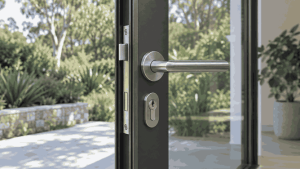
Modern aluminium bi-fold doors don’t just insulate well—they seal brilliantly too. Multi-point locking systems paired with high-quality weather seals ensure virtually no air infiltration when closed. This air-tightness is a crucial consideration in energy ratings.
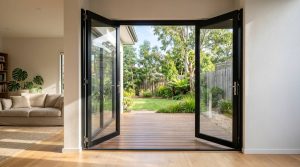
Plus, these doors are smart. You can selectively open certain panels to control ventilation, or fold them completely back to create seamless indoor-outdoor connection. This flexibility lets you adjust your sunroom’s “openness” according to season, weather, or even different times of day—fully open in spring and autumn to enjoy natural breezes; closed in summer with shading for coolness; sealed in winter to lock in warmth.
Choose the right doors and windows, and your sunroom transforms from an “energy black hole” into a flexible space you can adjust as needed. This controllability is the core principle of high-efficiency building design.
Passive Heating in Spring/Autumn: Harnessing Natural Sunlight, Reducing Heating Needs
Now let’s discuss the sunroom’s greatest energy advantage: passive heating.
Melbourne’s climate features fairly long spring and autumn seasons with moderate temperatures and decent sunshine. During these periods, if your house is well-designed, you don’t need heating or cooling at all—just let the sun do its job.
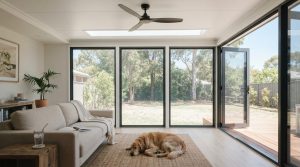
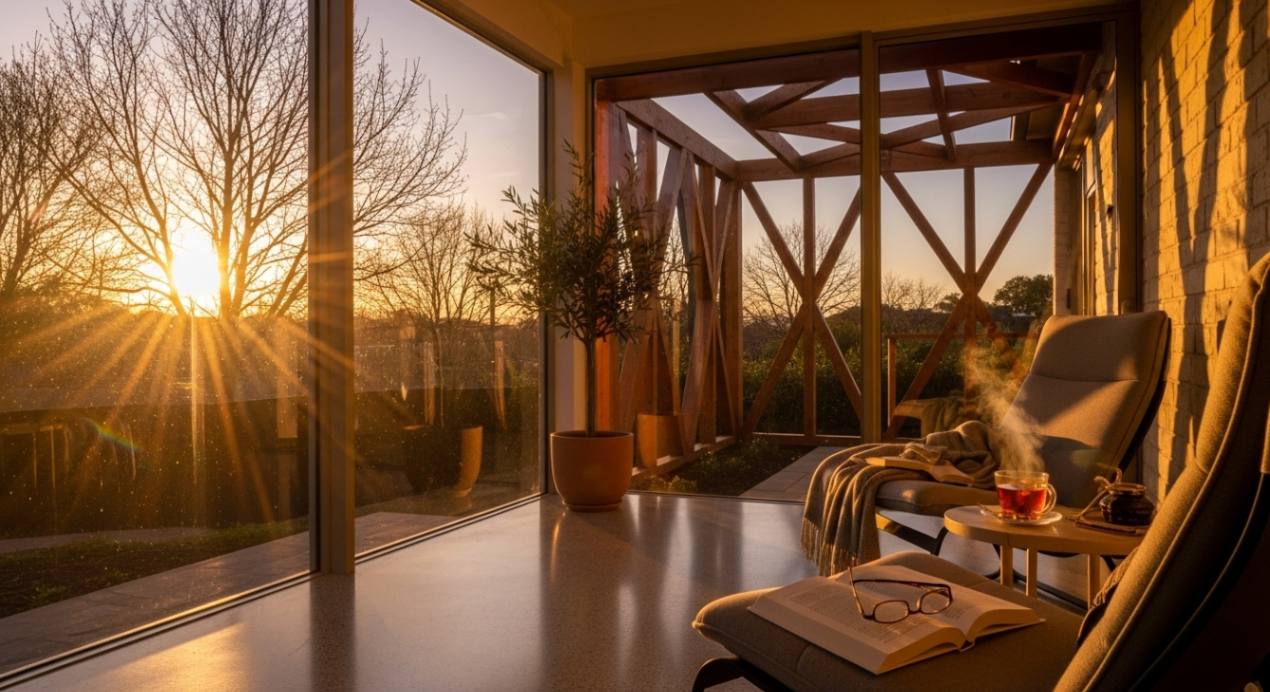
A properly oriented sunroom (typically north-facing, since Australia is in the Southern Hemisphere where north receives the most sun) acts as a natural “solar collector.” In spring and autumn, sunlight streams through high-performance glass, floors and walls absorb the heat, then slowly release it to keep the entire space warm. If your sunroom connects to the main house, this warmth can “spill” into adjacent rooms, reducing the whole home’s heating requirements.
This is the positive application of the “greenhouse effect”—not warming the planet, but naturally warming your house when needed. The key is controlling this effect: you want it in spring and autumn, but need to prevent it in summer.
That’s why good sunroom design incorporates pergolas, adjustable shading blinds, or natural shading from deciduous trees (leaves provide shade in summer, fall in winter allowing sunlight through). These elements combined achieve the ideal state of “cool in summer, warm in winter, just right in spring and autumn.”
The benefits of passive heating aren’t just comfort—they’re tangible energy savings. Every hour you avoid running the heater represents real savings on your electricity bill. Moreover, in energy ratings, passive design earns bonus points—the assessment system recognises you’re utilising natural resources and reducing dependence on artificial energy.
So stop thinking of sunrooms as “energy burdens.” When designed correctly, they’re powerful allies in reaching your 7-star rating.
From Construction Costs to Long-Term Returns: The Energy Investment Value of Sunroom Extensions
We’ve covered the energy advantages of sunrooms extensively—now let’s talk money, because we all know that while ideals are wonderful, reality depends on budget.
A high-efficiency sunroom extension will indeed cost more upfront than an ordinary “glass room.” High-performance glazing, thermally-broken aluminium doors and windows, superior insulation materials, professional design and construction—none of these come cheap. Looking only at initial investment, you might hesitate: “Is it worth it?”
But investment should never be judged solely on upfront costs—you need to consider long-term returns.
First, energy savings are ongoing. A well-insulated sunroom means your entire home’s energy consumption drops—less aggressive air conditioning in summer, less heating in winter, potentially relying entirely on passive heating in spring and autumn. These accumulated electricity and gas savings, year after year, could recoup your initial extra spending within several years.
Second, property value appreciation. In Australia, especially sustainability-conscious cities like Melbourne, high-efficiency homes are increasingly desirable. Buyers examine energy ratings and care about utility costs. A 7-star (or higher) rated home doesn’t just sell easier—it commands better prices. Your current investment could return as higher sale value down the line.
Third, quality of life. This is hard to quantify financially, but it truly matters. A comfortable, bright, climate-stable sunroom significantly enhances your living experience. It becomes your morning coffee spot, your children’s play space, your weekend gathering place for friends. This quality-of-life improvement? Priceless.
Finally, compliance and future-proofing. As building codes tighten, energy requirements will only increase, not decrease. Building to—or beyond—current standards now means avoiding future policy-change headaches or retrofit costs. That’s prudent forward-thinking.
So, the energy investment in a sunroom extension isn’t “extra expense”—it’s a “smart long-term investment” delivering returns in energy savings, property value, quality of life, and future compliance. The key is finding the right professional design and construction team to ensure every dollar is well-spent.
Working With Nature, Not Against It
Back to the original question: when building in 2025, is a sunroom the answer or a burden?
The answer is clear: if you’re still viewing sunrooms through outdated thinking, seeing them as “glass boxes” and “energy killers,” then yes, they could be burdens. But if you embrace modern building technology and design philosophy, understanding superior insulation, thermal performance, and passive heating, then sunrooms aren’t burdens at all—they might be your key step toward achieving 7-star energy ratings.
Sustainable building never meant sacrificing comfort or living in an airtight “box.” True sustainability means living smarter—utilising nature rather than fighting it.
When your sunroom becomes a sun-filled greenhouse in winter, collecting free solar energy; a cool retreat with pergola protection in summer, blocking heat; and an open transitional space in spring and autumn, seamlessly connecting you to the outdoors—that’s when you’ll understand: good design isn’t limitation, it’s freedom; not compromise, but enhancement.
That’s the real meaning of 7-star energy efficiency: not a cold number, not just a compliance certificate, but a lifestyle—smarter, more comfortable, more sustainable.
And a well-designed sunroom perfectly embodies this lifestyle. So stop hesitating. Instead of worrying whether it’s a “burden,” take charge and make it the highlight of your 7-star home.
Note: Energy rating standards and efficiency benefits mentioned in this article are general explanations. Specific requirements and results may vary based on building design, location, material selection, and other factors. We recommend consulting professional architects and energy assessors before planning your project for the latest regulations and personalised advice. For more professional information about doors, windows, and sunrooms, please visit relevant service provider websites.