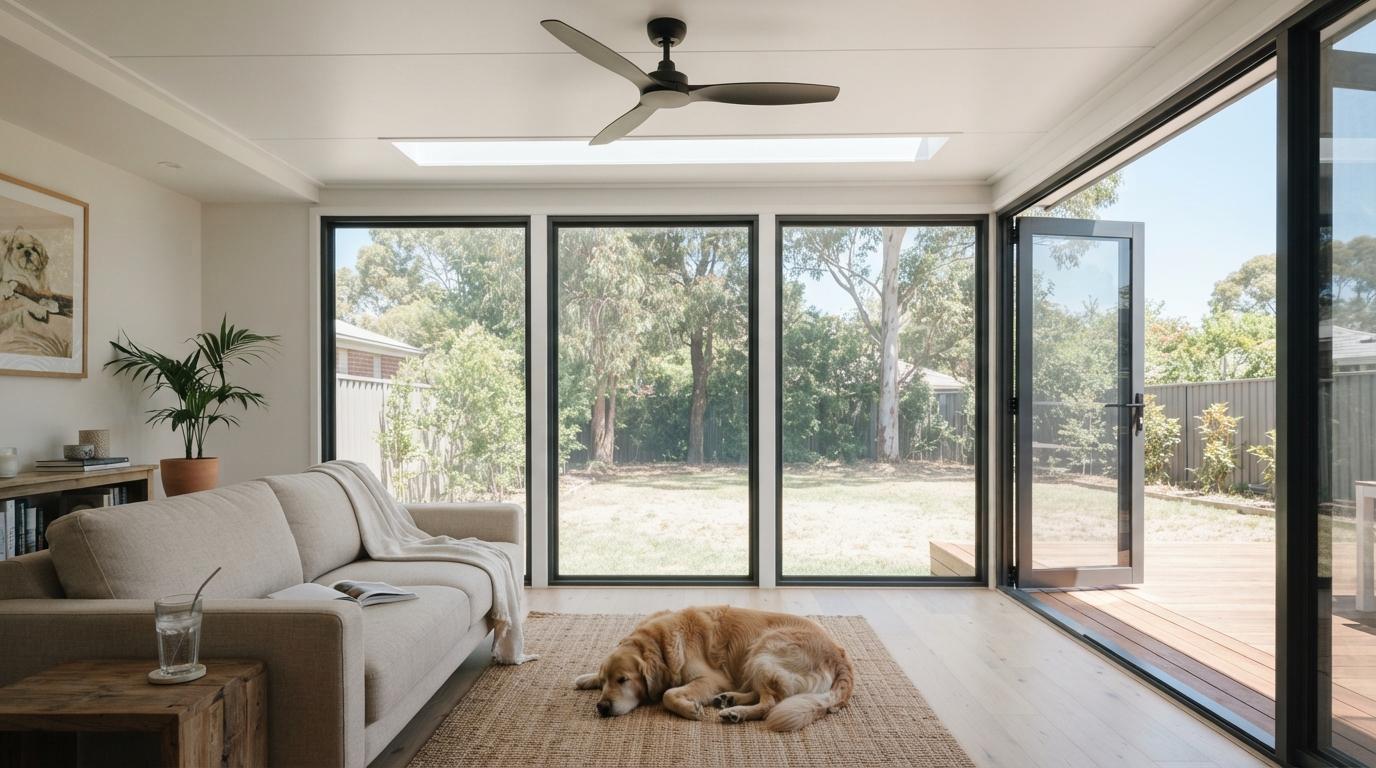
A sunroom that turns into an oven every February is a common complaint, and it is usually fixable. Not by rebuilding — by working out which surface the heat is actually coming through, and dealing with that one first.
This guide is for people whose sunroom is already built. If yours is still on paper, read the three decisions you cannot undo instead, because most of what makes a room comfortable is settled before anything is built.
Worth knowing what you are designing against: at Melbourne Airport the number of days at or above 35°C has swung between 4 and 23 a year over the past decade. A room that copes with a mild summer can still be unusable in a hot one.
First, Work Out Which Kind of Hot You Have
Heat enters through different surfaces at different times of day, and the symptom tells you which one. Spending money before you have identified it is how people end up with an expensive air conditioner that still loses.
| What you notice | Most likely cause | Where to start |
|---|---|---|
| Worst around midday, heat felt coming down from above | Solar gain through the roof | Roof shading or a ceiling upgrade — the hardest fix, see the last section |
| Fine in the morning, unbearable from 3pm | Low western sun straight through the glass | External shading on the west — the best-value retrofit there is |
| Stuffy all day, but the glass and walls do not feel hot | Trapped air with nowhere to escape | Ventilation and air movement |
| Air conditioner runs constantly and never wins | Heat coming in faster than the unit can remove it | Reduce the gain first, then reassess the unit |
| Hot in summer and freezing in winter | The glazing itself is doing very little | Glazing — and be realistic about the cost |
If more than one row sounds like your room, work down the list in order. The fixes stack.
External Shading Beats Everything Else You Can Retrofit
If you only do one thing, do this. An external blind, awning or louvre stops the sun before it reaches the glass. An internal blind does not — by the time the sun has passed through the glass the energy is already inside the room, and the blind is simply standing between you and it.
Concentrate on the western elevation. Afternoon sun comes in at a low angle, so eaves and overhangs give you almost nothing, and it arrives at the hottest part of the day into a room that has been warming since morning. North-facing glass is far easier — the summer sun is high, so even a modest overhang does real work.
This is also the one significant fix that does not involve touching the structure, which is why it is usually the best value per dollar in an existing room.
Let the Hot Air Out
Hot air rises and collects at ceiling level. If every opening in your sunroom is at low level, that heat has nowhere to go and simply sits above you all afternoon. You need an outlet high up, and ideally an inlet somewhere lower and on a different wall, so air moves through rather than swirling in place.
For reference, the National Construction Code asks for an openable ventilation area of at least 5% of a habitable room’s floor area. Treat that as a floor rather than a goal: a room with two glass walls has considerably more heat to shift than an ordinary room of the same size.
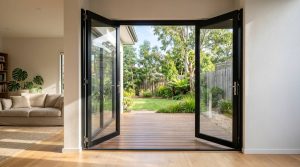
What you have makes a difference here. Bifold windows open almost completely, tilt-sliding windows give you a secure gap you can leave open overnight to purge the day’s heat, and double swing doors clear the entire opening when both leaves are back.
A Ceiling Fan Is the Cheapest Real Improvement
A fan does not lower the air temperature. It moves air across your skin, and the difference in how the room feels is worth several degrees for a very small outlay. In a room where the alternative is running a compressor for six hours, that is a meaningful saving as well as a comfort gain.
Fans work best paired with the ventilation above — moving air towards an open high-level window pushes the hottest air out rather than stirring it around.
Window Film and Replacement Glazing: Be Realistic
Solar control film is cheap and can take some of the edge off, particularly on a west-facing pane. It is not a transformation, it can change how the glass looks from outside, and on double-glazed units you should check with the glazing supplier first because some films are not suitable and can affect a warranty.
Replacing the glass is a different conversation. It works, but the cost approaches redoing the elevation, so it only makes sense if you were planning other work anyway. If you do go down this road, the number to ask for is the Solar Heat Gain Coefficient, not just whether the unit is double glazed. Double glazing mainly improves the U-value, which governs winter heat loss; SHGC is what governs how much solar energy comes through in summer, and a double-glazed unit made from plain clear glass can have a perfectly good U-value and still let a lot of heat in. Our guide to double glazed windows and cost savings goes into the detail.
Air Conditioning Comes Last, Not First
Cooling a room while the heat is still pouring in is expensive and often ineffective. Reduce the gain first with shading and ventilation, then size a unit against what is left.
One thing to flag with whoever quotes the unit: a room with two glass walls has a much higher cooling load than an ordinary room of the same floor area. Sizing on square metres alone is how people end up with a unit that runs flat out and still cannot hold temperature.
What You Cannot Retrofit
Two things are effectively fixed once the room is built, and it is better to know that than to keep spending around them.
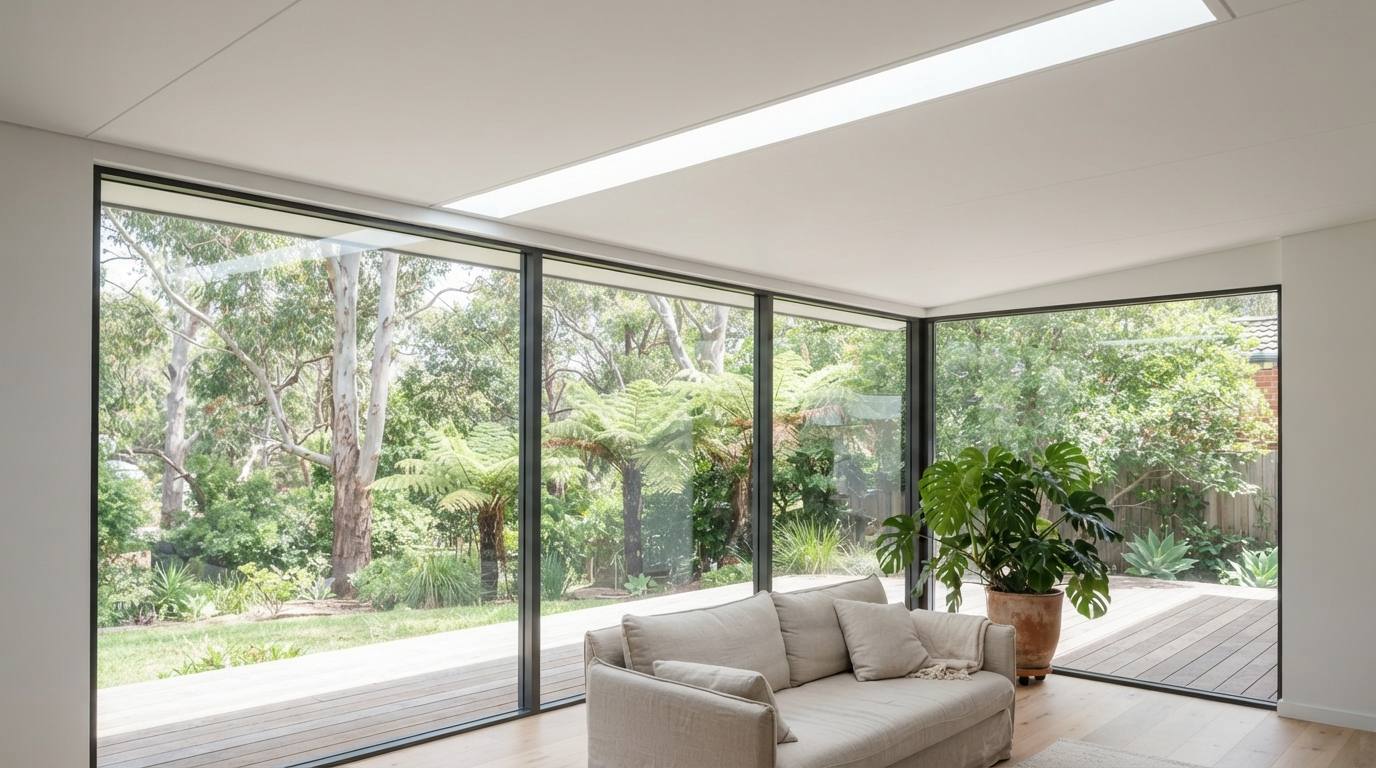
The roof. In summer the midday sun strikes a roof close to square on while it only glances off vertical glass, so a fully glazed roof is taking the strongest sun of the day. Changing to an insulated panel afterwards means removing the roof, along with its structure, drainage and flashings. External shading over a glass roof is the practical middle path.
Orientation and where the glass sits. Wall positions and opening sizes are structural. You can shade west-facing glass, but you cannot move it.
Both of these are decided on the drawings, which is the whole argument of our guide to the three decisions you cannot undo. If you are helping someone else plan a sunroom, send them that one.
Frequently Asked Questions
Why is my sunroom so much hotter than the rest of the house?
Because it has far more glass per square metre of floor than a normal room, and often a roof that admits heat as well. Glass lets solar energy in easily and holds very little of it back, so the room heats faster and further than the rooms around it.
What is the single most effective fix for an existing sunroom?
External shading on the west-facing glass. It stops the sun before it reaches the glass, it does not require structural work, and it targets the worst time of day.
Do internal blinds help with heat?
Only a little. Once sunlight has passed through the glass the heat is already in the room. Internal blinds are useful for glare and privacy, but for temperature the same money spent outside the glass does far more.
Will double glazing fix an overheating sunroom?
Not by itself. Double glazing mainly improves the U-value, which is about winter heat loss. Summer overheating is governed by the Solar Heat Gain Coefficient, so ask for that figure specifically rather than asking whether the glass is double glazed.
Is window film worth it?
It can help on a badly exposed pane and it is inexpensive, but treat it as a partial measure rather than a solution. Check with your glazing supplier before applying film to double-glazed units.
Can I convert a glass sunroom roof to an insulated one?
Technically yes, but it is a structural job rather than an upgrade, because the framing, drainage and flashings were all designed around the original roof. For most existing rooms, shading over the glass roof is the more sensible route.
Start With the Cheapest Thing That Works
| Fix | Effect | Disruption |
|---|---|---|
| External blinds or awnings | Large | Low — fitted from outside |
| More ventilation up high | Moderate to large | Medium — involves cutting into finished work |
| Ceiling fan | Moderate, immediate | Low |
| Window film | Small to moderate | Very low |
| Replacing glazing | Moderate | High, and expensive |
| Internal blinds | Small | Very low |
Work down that list rather than starting at the bottom. Most rooms improve enough with shading, ventilation and a fan that the expensive options never become necessary.
If you would like someone to look at the room and tell you which row applies to you, get in touch. You can also see completed projects in our project gallery.
Melbourne Sunroom designs, manufactures and installs custom aluminium doors, windows and sunrooms across Melbourne. Product display available in Point Cook — inspections by appointment only.