A sunroom changes how a home feels the moment a buyer walks in. More light. More usable space. A direct link to the garden. But will a sunroom add value in actual dollars when you sell? And could it quietly subtract value instead?
This guide answers both questions honestly. First, we look at what the resale data shows. Then we cover which designs move the needle. Finally, we explain the one factor almost nobody writes about: your building permit. In Victoria, that single document often decides whether sunrooms add value or become a problem at settlement.
How much does a sunroom add value at resale?
There is no single Melbourne-wide percentage. So it pays to read published ranges from independent sources rather than anyone selling you a room.
Across international industry data, one pattern repeats. Sunrooms typically recoup around 50–70% of their build cost at resale. The top of that range belongs to fully insulated, year-round rooms. Basic three-season or screened rooms sit lower, at roughly 30–50%. Meanwhile, fully conditioned rooms that read as genuine living area can attract a 4–8% sale-price premium over comparable homes without one.
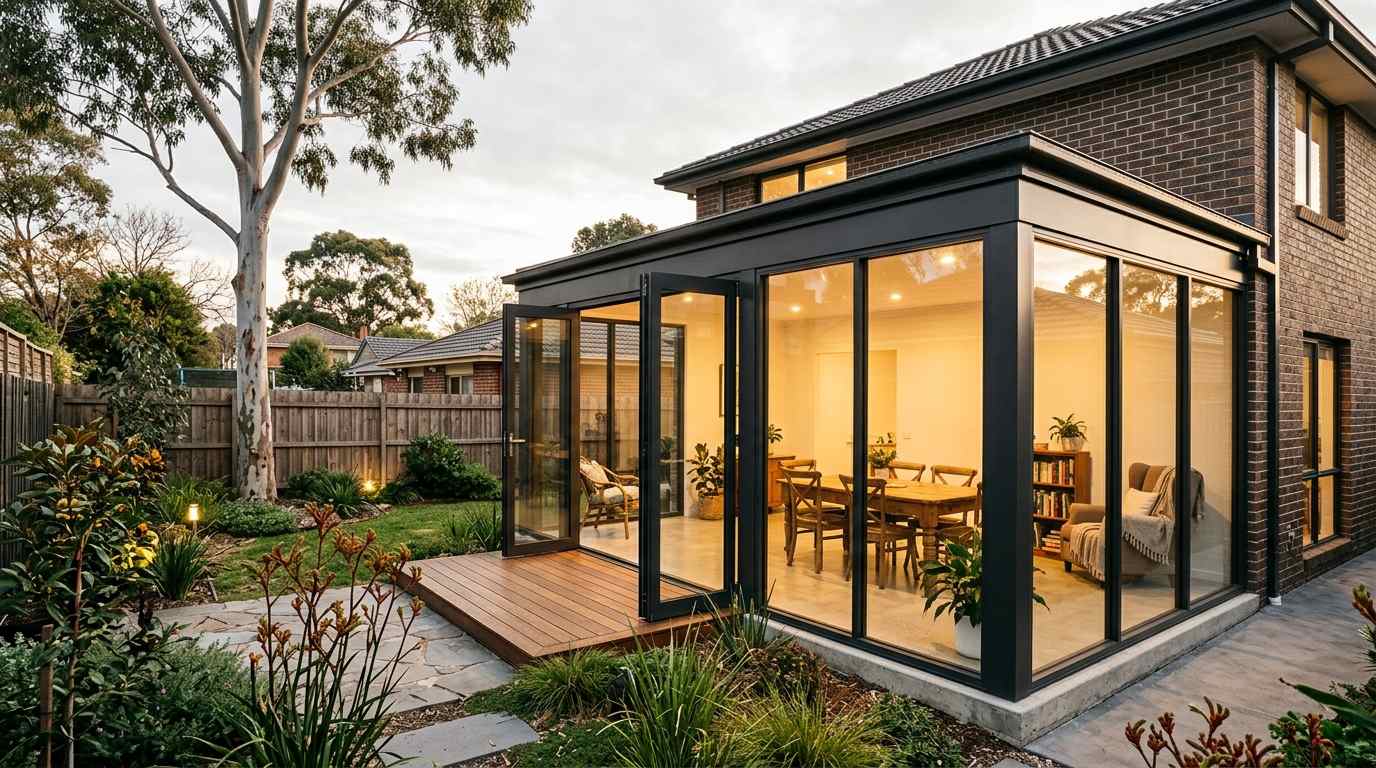
One factor drives that spread. It is whether the room counts as habitable floor area. A permitted, insulated sunroom on a compliant foundation can be valued at close to your home’s standard rate per square metre. In other words, a valuer treats it much like an extension. A lightweight enclosure is different. Valuers usually read it as covered outdoor space, closer to a quality pergola than to a living room.
Here is what that means in practice. Say homes in your suburb trade at $6,000–$9,000 per square metre of living area. A 20 m² room that genuinely counts as living area then sits in a completely different bracket to one that does not. Therefore the paperwork, not the glass, often decides the final number. Faster sales help too. Agents consistently report that light-filled indoor-outdoor space is one of the features that gets buyers through the door.
For build costs by size, glazing and frame configuration, see our Melbourne sunroom budget, permit and timeline guide.
Permits, valuation and your buyer’s home loan
This is the angle missing from almost every article on whether a sunroom adds value. In Victoria, it matters more than the glazing spec.
When you sell here, you must give the buyer a Section 32 vendor statement before they sign the contract. Among other things, it discloses building permits issued for the property in the previous seven years. So an addition that is obvious on site, with no matching permit on paper, becomes an immediate red flag. Conveyancers are trained to compare visible works against the permit trail. Then they warn the buyer in writing. You can read the state’s own summary of a seller’s obligations at Consumer Affairs Victoria.
An unpermitted room can cost you in four separate ways:
- Buyer leverage or withdrawal. A defective Section 32 can give a purchaser grounds to rescind. Even when it does not, a savvy buyer will negotiate the price down. Often that discount exceeds what the permit would have cost.
- Council building orders. If council finds non-compliant works, it can order rectification or removal. That order must then be disclosed. Worse, the cost of fixing it follows the property.
- Valuation discount. A bank valuer who cannot verify approval will usually exclude the room from habitable floor area. As a result, the $30,000 you spent can contribute close to nothing.
- Lending friction. If the valuation lands short, your buyer’s loan can shrink or stall. Deals fall over on exactly this point.
None of this argues against building. Instead, it argues for building through the proper process. For many Victorian projects, that process is far simpler than owners expect. Our guide to sunroom permits in Victoria covers when a permit is required and what is exempt. The state’s practice note BP 01 When is a building permit required sets out the underlying rules.
In short: a permitted sunroom adds value that your buyer’s bank can see. An unpermitted one is a liability their conveyancer will find.
Where a sunroom adds value most
Not all rooms are equal in a valuer’s eyes. Five features do most of the work.
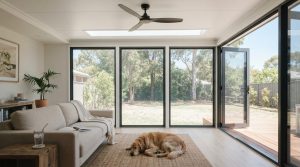
1. Thermal performance. Double glazing, Low-E glass and thermally broken aluminium frames make the room usable in a Melbourne July. Consequently, it can be treated as year-round living space rather than a seasonal enclosure. These specs also cut running costs, which energy-conscious buyers now ask about.
2. Structural integration. A room on a proper slab or stumps reads as part of the house. Add an insulated roof and direct internal access, and the effect is stronger again. By contrast, a bolt-on enclosure over existing decking reads as an accessory.
3. Compliance you can prove. Keep the building permit, final inspection certificate, engineering documents and warranty paperwork together. At sale time, those documents are the value. They decide whether a valuer counts the space or discounts it.
4. Light without heat problems. North-facing orientation plus the right glass is the sweet spot. A west-facing glass room with single glazing and no shading can become a negative at inspections. Buyers will say it outright: this room would be an oven in January.
5. Flexible use. Rooms that work as a dining area, home office or second living room appeal to more buyer types. A narrow lean-to that fits two chairs does not.
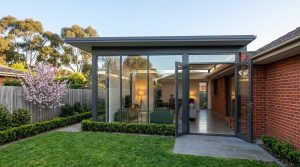
You can see how these choices play out in real homes in our completed project gallery, including frame and glazing options for bi-fold door and sliding door openings.
Sunroom vs deck, garage or full extension
It also helps to compare the alternatives side by side. Each option buys you something different.
| Addition | Typical Melbourne cost | Value character |
|---|---|---|
| Sunroom (insulated, permitted) | Mid-range for the floor area gained | Adds light-filled living area. Strong buyer appeal. Counts toward habitable space when compliant. |
| Timber deck or pergola | Lower cost | Improves lifestyle appeal. Rarely counted as living area. Use depends on weather. |
| Garage conversion | Similar or higher once compliance is included | Adds internal space but removes secure parking. That is a genuine negative in many suburbs. |
| Full brick extension | Highest cost per m² | Highest value per m². However, the timeline is longest and the build most disruptive. |
A sunroom sits in a useful middle position. It is cheaper and faster than a traditional extension. Yet, when built and permitted properly, it delivers something a deck never can: additional indoor living area.
What agents check when a sunroom adds value
Talk to selling agents and three themes come up again and again.
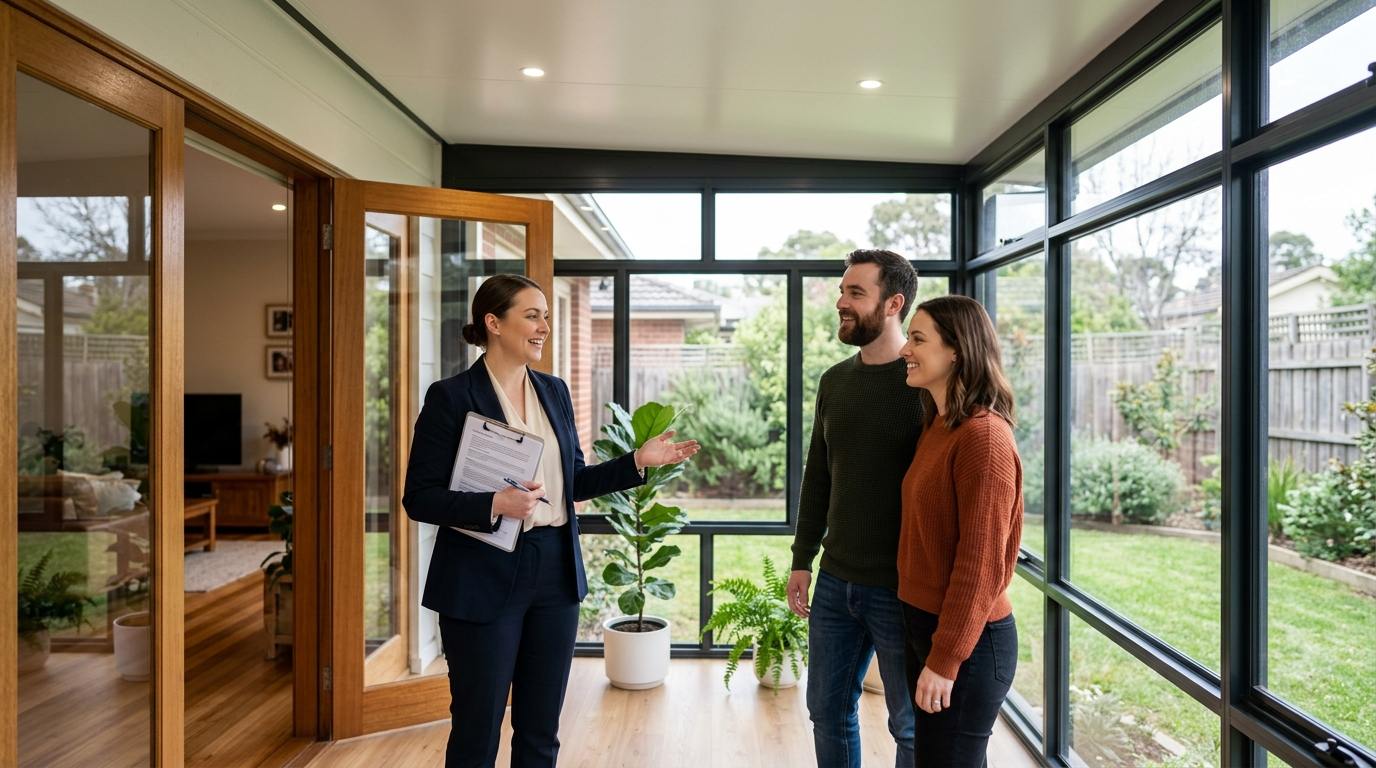
- Is it council-approved? This is the first question a buyer’s conveyancer asks. The Section 32 either answers it or exposes the gap.
- Can it be used in winter? Insulation and glazing quality decide whether the room is marketed as year-round living space or a summer feature.
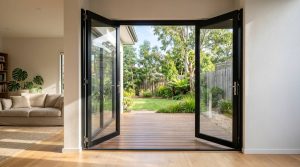
- Does it flow? Rooms that open naturally off the kitchen or living area photograph better and inspect better. Wide bifold or sliding openings to the garden help most.
If your room answers yes to all three, it is not just adding lifestyle. It is adding sale price.
FAQ: does a sunroom add value in Melbourne?
How much does a sunroom add value in Melbourne?
There is no fixed percentage. However, independent industry data consistently shows insulated, permitted rooms recouping around 50–70% of build cost at resale. Well-integrated rooms also attract a price premium and sell faster. Rooms that qualify as habitable floor area are valued far more strongly than lightweight enclosures.
Does an unpermitted sunroom add value or reduce it?
It can reduce it. In Victoria, building permits from the last seven years must be disclosed in the Section 32 vendor statement. Unpermitted works can then trigger council rectification orders, price renegotiation, valuation discounts and lending delays. Often that costs more than the permit process would have.
Do sunrooms add value more than a deck does?
Generally yes. A compliant insulated room adds indoor living area, while a deck adds outdoor amenity. A deck is cheaper to build. Even so, valuers rarely count it toward habitable floor space.
What features do buyers pay more for?
Double glazing or Low-E glass, thermally broken frames, an insulated roof and proper foundations all help. Internal access from the main living area matters too. Above all, buyers pay more when there is a complete permit and inspection paper trail.
Do I need a permit to build a sunroom in Victoria?
In most cases, yes. Some small structures are exempt, though. See our Victorian sunroom permit guide for the rules on floor area, setbacks and site coverage, plus what your installer should handle for you.
This article is general information only. It is not legal, financial or valuation advice. Building and disclosure requirements vary by council and change over time. Always confirm current requirements with your local council and a licensed conveyancer. Last updated: August 2026.